
Ask what a late fee costs and the honest answer starts with the fee. Ten dollars on the electric. A percent and a half on the water. Fifty on the rent after the fifth. Those numbers are real enough (they're examples, and yours will differ), and they're also the smallest part of the cost. The fee is what shows up on the statement. The rest shows up in your week.
The fee is the small part
Take an invented but ordinary month. The electric bill is $130 and the late fee is a flat $10. That's about 8 percent of the bill for being a day late, which is already a poor rate for one day. Suppose it goes further. A utility can suspend service after enough notices, and turning it back on usually means a reconnection charge; call it $30 as an example, plus a morning at home waiting for it. Now the ten dollar fee is a forty dollar problem with a morning attached.
Car insurance is the sharper case. Miss the payment and there may be no late fee at all, which sounds generous until you learn why. After a grace period, the policy can lapse. The cost isn't a fee. It's the days you drove without coverage, the phone call to reinstate, and a rate that may not be the one you had. No number on a statement captures that.
Rent is a clause. Say the lease reads "$50 after the 5th," as an example. The fee is fixed, and so is the awkward conversation, and neither one is worth a Thursday you could have known about.
The phone plan is the quiet one. Pay late enough and the line stops working, and the day it stops is never a convenient day. Add the charge to restore it, as an example $20, and the hour on hold.
Add up the ordinary month. Fee, reconnection, the lapse, the hour on the phone. The late fee was the headline. The story ran longer.
Why the due date is the wrong day to remember
Here's the thing about willpower on the due date: it's the worst day to use it. The due date is when a payment must have arrived, and some billers take a day or two to post one, which means paying on the due date can still be late by their clock. It's also a day you didn't choose. It falls on a Thursday when you're at work or a Sunday when the office is closed. Being reminded on the day is being reminded too late to do anything but hurry.
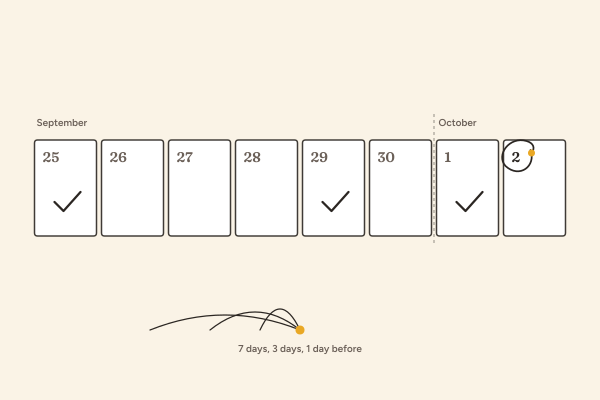
So the fix isn't more remembering. It's three earlier days, each with one small job.
days before
look
days before
pay
day before
check
Seven days before: look
A week out, the text arrives with the biller and the amount. The job is to read it. That's all. Is the number what you expected? Will the money be in the right place on the day? Is this the month to move the due date, or to call about the amount? A week is enough time for any of those, and it costs you fifteen seconds to check. Most weeks the answer is "yes, fine," and the text is filed. That's the point. You've looked, and now Thursday holds no surprise.
Three days before: pay
Three days out is the paying day, and it's the one to keep if you keep only one. It's close enough that the money is where it needs to be and far enough that a payment has time to post before the due date, even with the billers that take a day or two. The text carries the link to the biller's own page. Tap, pay on that page, come back, mark it paid. The whole thing runs shorter than reading this section. And because you've paid three days early, the due date becomes a day like any other.
One day before: check
The last text is a check, not a nag. If the bill is marked paid, you're done, and the text is a small confirmation that the month is holding. If it isn't marked paid, something happened: the tap got interrupted, the page timed out, the amount stopped you. The day before is the last moment to fix that without a fee. It's the day the late fee, and everything that rides with it, is still entirely avoidable.