
Nobody forgets the rent. The bills that go late are the ones that come through a door you weren't watching: the propane company that only sends paper, the streaming plan quietly billing a card you don't look at, the trash service that wants money four times a year on its own schedule. A house has three doors for bills. Email, the mailbox, and the apps that only speak up when they want something. Nobody has ever walked all three in one sitting, which is why the month never feels complete.
So don't try to remember harder. Spend one evening walking the three doors, put everything on one month, then set a single house rule so nothing gets past the counter again. Ninety minutes, roughly. Here's the order, and the order is most of the trick.
-
Step 1. Start with the inbox, because it's the widest door
Open your email and search the last 60 days for "due", "amount due", "statement is ready" and "autopay". Every biller that emails you will surface, including the ones whose messages you've been swiping past since spring. Don't add anything yet. Write a plain list: the biller, the rough amount, the day of the month it's due. Electric, 14th. Internet, 20th. Phone plan, 6th.
The list comes first for a reason. You want to see the shape of the month before you commit it anywhere. A house that discovers it has six bills due between the 1st and the 5th learns something useful right there, and it's easier to see on one sheet of paper than one bill at a time.
-
Step 2. Then walk the house for paper
Now stand up. The counter pile, the fridge door, the drawer by the phone charger, the glovebox, the basket by the front door where the mail lands when nobody's ready for it. You're after window envelopes and anything with a stub along the bottom. These are the billers that never went digital, or that you never got around to switching: the propane company, the pest service, the county for the trash. Add them to the same list, with a mark that says paper.
Why paper second and not first? Because the inbox search is mechanical and warms you up. Paper needs you to actually look, and by now you know what you're looking for.
-
Step 3. Open the apps that bill you without asking
The third door is the quietest. The phone plan, the gym, the streaming plans, the cloud storage you forgot you pay for. Each one lives in its own app or its own website, each one thinks it's the only bill you have, and none of them will ever appear in your inbox unless something goes wrong. Open each one, find the billing date, and add it to the list. Ten minutes. This is usually where the surprises are, and they're rarely large, which is exactly why they hide.
-
Step 4. Put the list on one month
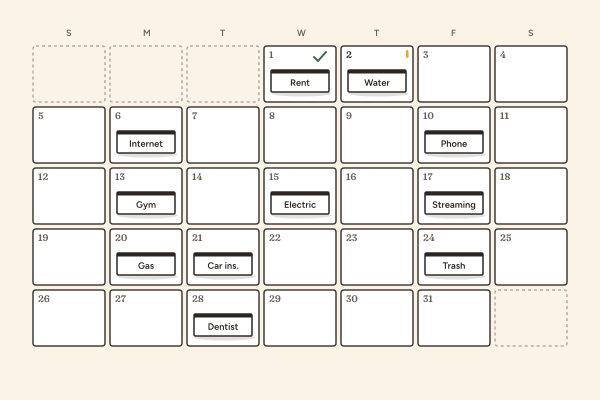
Now the app. Take the list top to bottom and add each bill: the biller's name the way you say it at home, the due day, the amount if you have it. On the Household plan the paper ones can go in by photo, which is faster than typing and catches the amount and the due date off the page. When each one lands you'll see it standing on its day, and by the end of the list the month has a shape. Clusters near the 1st. A quiet stretch in the middle. The 20th to the 25th busier than you thought.
Give each bill its reminders as you go. Three days before is the default and a good one. If a bill needs money moved first, say from savings, take seven days as well. And if someone else in the house handles a bill, mark it, so it shows under their name on the shared calendar and the heads-up goes to their number.
Before you close the app, go back through the year in your head for the ones that don't come monthly. Renters insurance, once a year. Car registration, once a year, from the county. The trash service, quarterly. Propane, whenever they fill the tank, which is not a schedule but is still a bill. Add each with its next due date and let the calendar carry it forward. These are the bills late fees are made of, because no monthly rhythm reminds you they exist.