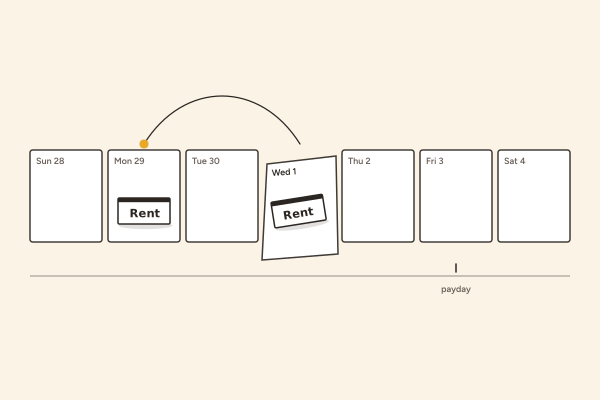

Autopay was invented to solve forgetting, and it does. It just solves it by taking you out of the room. The bill arrives, the amount is decided, the money leaves, and you find out afterward, if you find out at all. That's not a plan. A plan is something you can look at on Tuesday and act on by Thursday. Autopay is a decision you made one afternoon three years ago and haven't looked at since.
None of this is an argument against paying on time. It's an argument about who's in the room when it happens.
The draft that runs before the paycheck posts
Here's the morning that sours people on autopay. Rent is due on the 1st. Payday is also the 1st. The draft runs at 6 a.m., the paycheck posts at noon, and for six hours the account is short, which is all it takes. The rent goes through, an overdraft fee lands on top of it, and you've paid extra for the privilege of being on time. Nobody did anything wrong. The lease says the 1st, payroll says the 1st, and the two never met.
A heads-up a few days before changes the shape of that morning. You know rent is due Thursday. You know the paycheck lands Thursday too. So you pay that afternoon, after the money is in, and rent is still on time. Same bill, same day, different hour, no fee. Or the text simply reminds you on Wednesday to move money over so the account is ready at 6 a.m. Either way, you were in the room.
The amount that changed and nobody said so
An electric bill moves with the weather. A house that pays, say, $95 in April can pay $210 in August with the air conditioning running, and autopay will pay $210 without a word, because that's its whole design: the amount is whatever the biller says it is. You find out when you look at the account, which is to say later.
A text with the amount in it is a different experience. "Electric bill, $210, due Thu Oct 16" arrives a week out and you have a week to decide what to do with that information. Maybe nothing. Maybe you move some money. Maybe you finally call about the thermostat. The point isn't the deciding. It's that the number reached you before the money left.
The promotional rate that quietly ended
Internet plans love a first year price. Twelve months at one rate, then the regular rate, disclosed somewhere in the paperwork you signed on a tablet at the door. With autopay, month thirteen looks exactly like month twelve until you happen to check, and that could be months later. A heads-up that carries the amount catches month thirteen on the day it happens, because the number is different and you're looking at it. Any bill that resets on an anniversary behaves the same way, and every house has a couple of those.
This isn't a complaint about any company. Prices change and companies say so, somewhere. It's a complaint about an arrangement where nobody on your side of the transaction is watching.